

From the moment we’re born, our breath is our first and most loyal companion. Yet, we rarely pay attention to it—until stress, anxiety, or fatigue force us to. What if you could harness the simple act of breathing to not only calm your mind, but also transform your health, balance your energy, and connect to your higher self?
Welcome to the transformative world of breath meditation, where ancient Ayurvedic traditions meet modern scientific validation. In this guide, we’ll dive into five powerful breathing practices—rooted in Tibetan and Buddhist wisdom, enhanced by yogic science, and confirmed by research—so you can breathe with purpose and live with power.
Why Breath Is Your Body’s Master Key
In Ayurveda, the breath—or prana—is the subtle energy that sustains life. Prana governs not only your physical processes (like oxygenating blood), but also your mental clarity and emotional stability. According to yogic science, when prana flows freely, the body and mind remain in harmony. When blocked, disease, stress, and imbalance take root.
Modern science agrees. Studies show that breath regulation can activate the parasympathetic nervous system, reducing cortisol (the stress hormone), lowering blood pressure, and even improving immune function.
A 2018 study published in Frontiers in Human Neuroscience revealed that just five minutes of deep breathing can reduce heart rate variability and promote emotional regulation. Meanwhile, traditional Ayurvedic texts like the Hatha Yoga Pradipika and Charaka Samhita detail how pranic breathing (Pranayama) strengthens ojas (vitality), tejas (mental clarity), and sattva (spiritual purity).
Let’s now explore five incredible breath-based meditation techniques that unite East and West.
1. Mindfulness of Breath: The Gateway to Presence
Rooted in: Buddhist mindfulness traditions
Scientific name: Focused Attention Meditation (FAM)
Ayurvedic equivalent: Sama Vritti Pranayama (Equal Breathing)
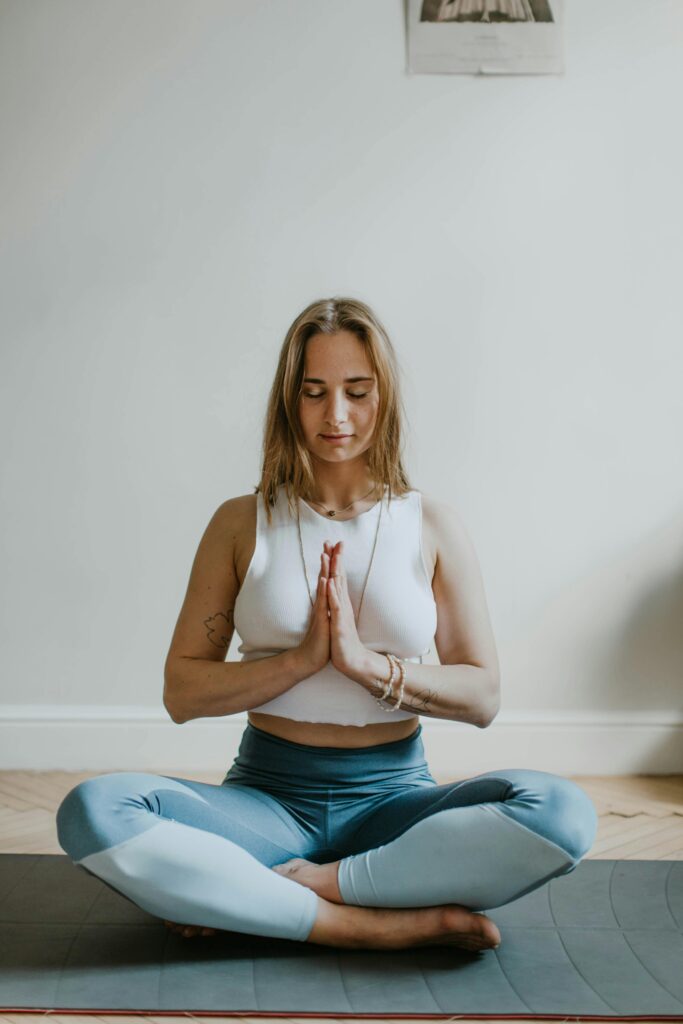
The Practice:
Sit cross-legged or in a chair with your spine straight. Gaze softly downward or close your eyes. Focus solely on the inhale and exhale. Each time your mind wanders (which it will), gently bring it back to the breath without judgment.
The Science:
Mindfulness-based breath awareness activates the prefrontal cortex, the brain’s center for executive function. A study in JAMA Internal Medicine found that participants who practiced breath-based mindfulness for eight weeks reported less anxiety, better sleep, and improved emotional control.
The Ayurvedic Lens:
This practice stabilizes Vata dosha, the energy of movement and communication. When Vata is balanced, you feel grounded, calm, and mentally clear. Use this breath when your mind races or when you’re overstimulated by screens or decisions.
2. Mixing Mind and Space: Dissolving the Ego
Rooted in: Vajrayana Buddhism
Ayurvedic equivalent: Antar Mouna (Inner Silence)
Spiritual aim: Expand consciousness and dissolve identification with the ego
The Practice:
Focus your attention on the out-breath. Visualize your breath merging into space. As your mind softens, release all thoughts. With each exhale, dissolve more deeply into the infinite awareness around and within you.
The Science:
Studies show that breath-focused meditations increase gamma brainwave activity, associated with higher states of consciousness and deep introspection. Research in Cognitive, Affective & Behavioral Neuroscience has shown this practice reduces activity in the default mode network (DMN)—the part of the brain responsible for rumination and self-referencing.
The Ayurvedic Lens:
This practice supports the Sattvic mind, cultivating peace, clarity, and detachment from ego. It also helps reduce excess Pitta, especially when driven by overachieving or perfectionism.
3. Tonglen: Breath as Compassion in Motion
Rooted in: Tibetan Buddhist practice
Meaning: “Giving and Taking”
Ayurvedic equivalent: Bhavana (mental visualization) + Pranayama
The Practice:
With each inhale, visualize yourself absorbing the pain and suffering of others as a dark cloud. On the exhale, send out healing, joy, and compassion as a cool, white mist. Start with someone you love, then include strangers and eventually even those you dislike.
The Science:
Research in Psychological Science supports that compassion-based meditations like Tonglen increase positive affect and empathy. A Stanford study found that just two weeks of compassion meditation boosted emotional resilience and pro-social behavior.
The Ayurvedic Lens:
Tonglen elevates Sattva while purifying emotional toxins (mental ama). It bridges Anahata (heart chakra) and Ajna (third-eye chakra), aligning higher emotional intelligence with spiritual insight.
4. Cleansing Breath: Energize and Detoxify
Rooted in: Tibetan yogic practices
Alternate name: Nine-Cleansing Breaths
Ayurvedic equivalent: Nadi Shodhana (Alternate Nostril Breathing)
The Practice:
- Close your left nostril with your finger and inhale through the right.
- Exhale through the left.
- Repeat three times, then reverse nostrils.
- Finally, breathe in and out through both nostrils with full exhalation.
The Science:
Alternate nostril breathing balances activity between the left and right hemispheres of the brain. It activates the parasympathetic nervous system, reduces anxiety, and increases oxygenation efficiency.
A study in International Journal of Yoga found this practice reduces blood pressure, increases lung function, and enhances mental performance.
The Ayurvedic Lens:
This breath purifies nadis (energy channels) and balances all three doshas—Vata, Pitta, and Kapha. Do this in the morning or before meditation to energize and detox your system.
5. The 4-7-8 Breath: Restful Sleep, On Demand
Rooted in: Modern integrative medicine
Popularized by: Dr. Andrew Weil
Ayurvedic inspiration: Chandra Bhedana (moon-piercing breath)
The Practice:
- Inhale through your nose for 4 seconds.
- Hold your breath for 7 seconds.
- Exhale audibly through your mouth for 8 seconds.
- Repeat the cycle 4 times (or more).
The Science:
This technique rapidly lowers heart rate, calms the nervous system, and facilitates sleep by stimulating the vagus nerve. It’s shown to reduce sympathetic overdrive, which is linked to insomnia, panic attacks, and hypertension.
The Ayurvedic Lens:
Aligns with cooling, lunar energy, calming the mind and body before sleep. Especially helpful for Pitta-related imbalances like irritation, anger, or restlessness.

How to Incorporate Breath Meditation Into Daily Life
- Morning Clarity: Start your day with Cleansing Breath to clear mental fog and awaken the senses.
- Midday Reset: Practice Mindfulness of Breath to refocus during work or study.
- Emotional First Aid: Turn to Tonglen when feeling overwhelmed or disconnected.
- Evening Wind-Down: Use 4-7-8 Breath to release tension and prepare for sleep.
- Weekly Deep Dive: Dedicate 20–30 minutes to Mixing Mind and Space for spiritual insight and ego release.
Breathe With Intention, Heal With Wisdom
Breath isn’t just air—it’s awareness, energy, and medicine. It’s the bridge between your mind and body, and the gateway to your higher self. Whether you follow Ayurveda, Buddhism, or neuroscience, the message is clear: control your breath, and you can transform your life.
So, as you sit with your next breath, remember—it’s not just about surviving. It’s about thriving, awakening, and evolving.
Ready to begin? Just inhale… exhale… and trust in the power of your breath.